Ice Cream: The Frozen Dessert Everyone Loves
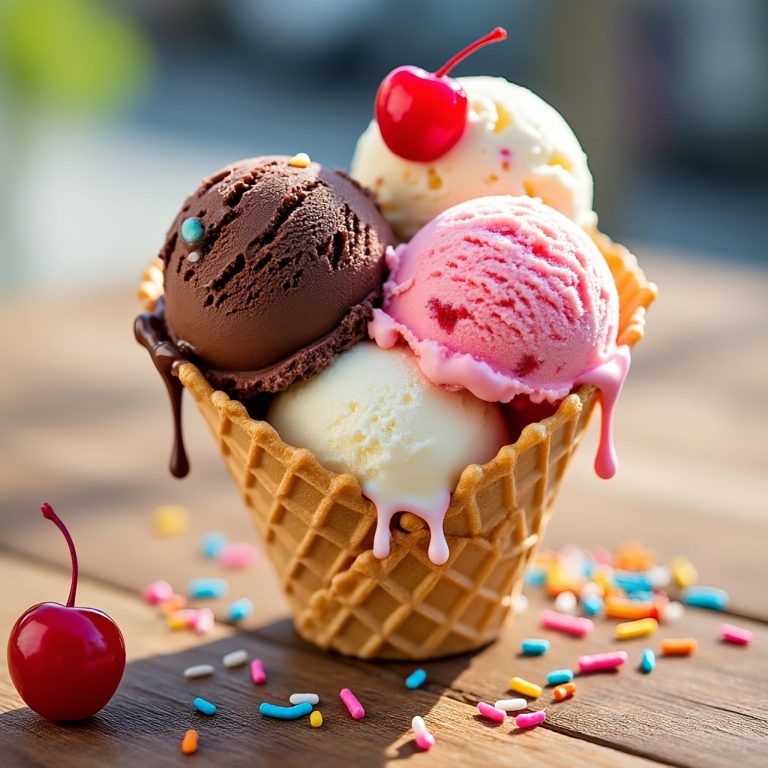
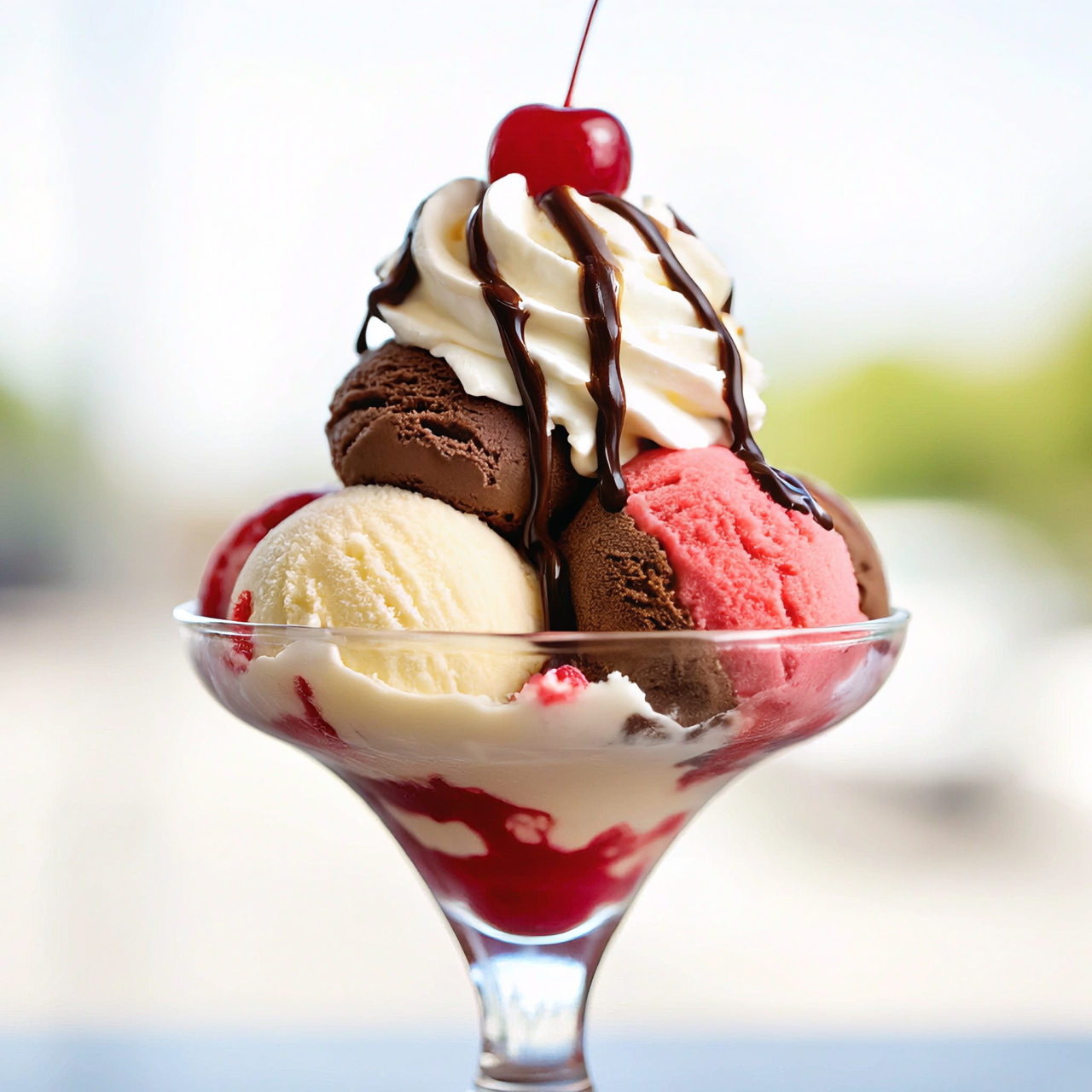
Ice cream is more than a dessert. It’s a universal comfort food that shows up at birthdays, hot summer days, and late-night cravings. Cold, creamy, and endlessly customizable, it has been winning people over for hundreds of years.
A Quick History
The idea of mixing ice with flavored liquids goes back to ancient China and Rome, where snow and ice were combined with fruit and honey. Modern ice cream as we know it started taking shape in 17th-century Europe, when sugar became more available and early icehouses made freezing easier. By the 1800s, mechanical freezers and mass production turned it into a global treat.
How It’s Made
At its core, ice cream is a mix of dairy, sugar, and air that’s churned while freezing. The churning breaks up ice crystals and folds in air, which gives it that smooth, scoopable texture.
The basic formula:
- Dairy base: Milk, cream, or a mix of both for richness.
- Sugar: Sweetens and lowers the freezing point so it doesn’t turn into a solid block.
- Flavoring: Vanilla, chocolate, fruit, nuts, cookies—anything works.
- Stabilizers and eggs: Optional, but they help keep the texture smooth and prevent ice crystals.
Gelato, frozen yogurt, and sorbet are close relatives. Gelato uses more milk and less cream, giving it a denser texture. Sorbet skips dairy entirely and uses fruit and sugar, making it dairy-free.
Why It Works
The appeal comes down to science and psychology. Cold numbs pain, so it feels soothing. Fat and sugar hit the brain’s reward centers, triggering pleasure. And the creamy texture feels indulgent even in small amounts. That’s why it’s often tied to mood—people eat it to celebrate, to cool down, or to feel better.
Global Variations
Every culture has its own frozen twist:
- Italy: Gelato, with intense flavor and less air.
- Japan: Mochi ice cream, wrapped in sweet rice dough.
- India: Kulfi, a dense, cardamom-spiced frozen dessert.
- Turkey: Dondurma, stretchy and chewy thanks to salep and mastic.
- Mexico: Nieves and paletas, fruit-based frozen pops.
- Morocco: Traditional frozen yogurt and fruit sorbets are common in summer.
Making It at Home
You don’t need a machine to make decent ice cream. The simplest method is the “no-churn” style: whip cream, fold in condensed milk and flavoring, freeze for 6 hours. For a healthier version, blend frozen bananas with cocoa or berries for a creamy, dairy-free “nice cream.”
The Bottom Line
Ice cream works because it’s simple, adaptable, and tied to good memories. It can be fancy or casual, healthy or indulgent. The core idea stays the same: take something sweet, freeze it slowly, and eat it before it melts.
Want me to give you 3 easy homemade ice cream recipes you can make without an ice cream maker?