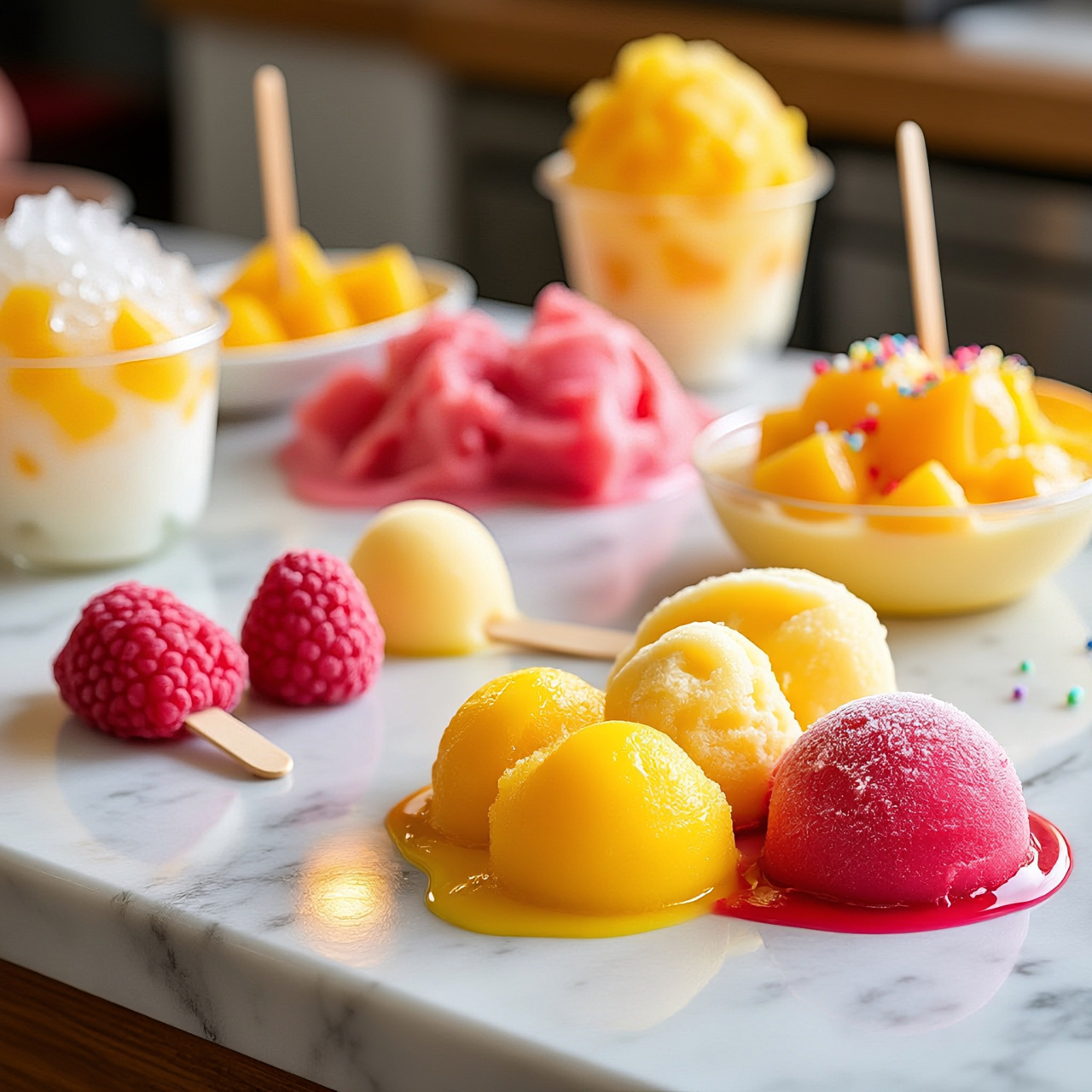
Frozen Desserts: Why Cold Treats Never Go Out of Style
Frozen desserts show up in every culture, under different names, but the idea is the same: take something sweet, lower the temperature, and turn it into a treat that cools you down and lifts your mood.
What Counts as a Frozen Dessert
The category is wider than most people think:
- Ice cream: Dairy-based, churned with air for a smooth, creamy texture.
- Gelato: Italian style, denser and more intense in flavor because it uses more milk and less air.
- Sorbet: Fruit, water, and sugar. No dairy, so it’s naturally dairy-free and sharper in taste.
- Frozen yogurt: Tangy, lighter than ice cream, often served with toppings.
- Shaved ice & granita: Crushed ice flavored with syrup or juice. Popular from Hawaii to Sicily.
- Kulfi, mochi ice cream, paletas: Regional versions that use local ingredients and textures.
The Science Behind the Creaminess
It all comes down to ice crystals and air. When you freeze a liquid slowly without stirring, you get big, crunchy ice crystals. Churning breaks those crystals apart and folds in tiny air pockets. That’s what gives ice cream its smooth, scoopable feel instead of turning into a solid block.
Fat and sugar also matter. Fat coats your tongue and carries flavor. Sugar lowers the freezing point, so the dessert stays soft even at -18°C. That’s why low-sugar versions often freeze too hard.
Why We Crave It
Cold dulls pain and inflammation, which is why people reach for it after a burn or a headache. But the main reason is sensory: the mix of cold, sweet, fat, and texture hits multiple reward pathways in the brain at once. Add nostalgia—birthdays, summers, family trips—and you’ve got a food that’s tied to memory as much as taste.
Around the World in One Scoop
- Turkey: Dondurma is chewy and stretchy thanks to salep and mastic. Vendors play with it before serving.
- Japan: Mochi ice cream wraps a small scoop in sweet rice dough. Soft on the outside, cold on the inside.
- India: Kulfi is dense, slow-frozen, and flavored with cardamom, saffron, or pistachio.
- Mexico: Paletas are fruit-based pops, often with chunks of real fruit inside.
- Morocco: Traditional frozen yogurt and fruit sorbets are common in summer markets.
Making It at Home Without Fancy Gear
You don’t need a machine. The easiest method is “no-churn”: whip heavy cream to soft peaks, fold in sweetened condensed milk and your flavoring, freeze 6 hours. For a dairy-free version, blend frozen bananas until creamy—add cocoa, peanut butter, or berries for variety.
The Bottom Line
Frozen desserts work because they’re simple, adaptable, and tied to good moments. Whether it’s a $1 popsicle or a hand-churned gelato, the goal is the same: contrast. Cold against heat, smooth against crunchy, sweet against tart.
Want me to give you 3 easy recipes—one classic, one healthy, one dairy-free—you can try this week?