Fish and Chips: Britain’s Most Iconic Comfort Food
Fish and chips is more than just a meal in the UK—it’s a cultural institution. Crispy, golden, and served with a side of nostalgia, this dish has been feeding Britons for over 160 years.
What It Is
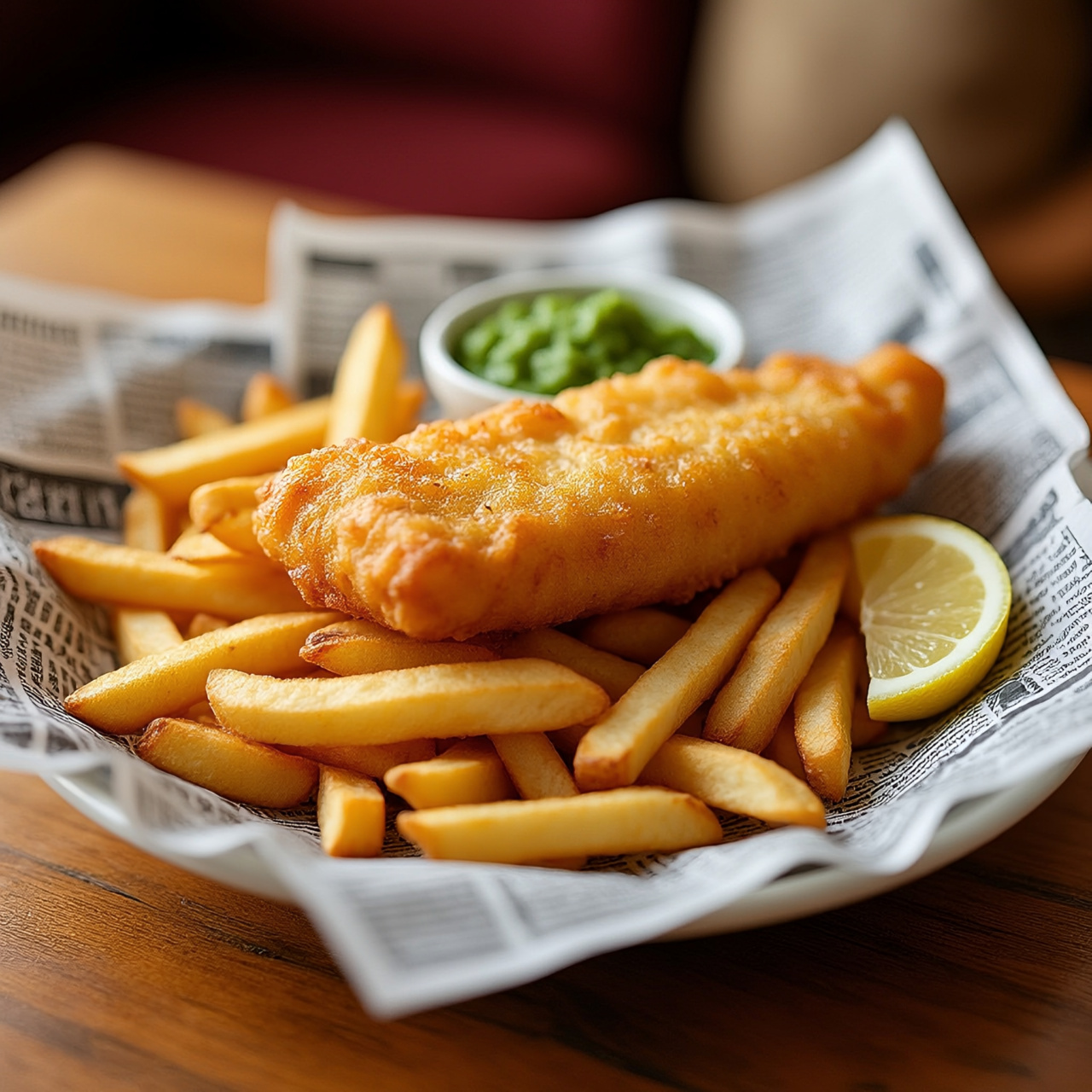
At its core, fish and chips is simple: a fillet of white fish, usually cod or haddock, coated in a light batter and deep-fried until crisp. It’s served alongside thick-cut chips, which are closer to thick fries than what Americans call “chips.” The dish is traditionally wrapped in paper and eaten with salt, malt vinegar, and sometimes tartar sauce or mushy peas.
A Bit of History
Fried fish was introduced to Britain by Jewish immigrants in the 16th century, while chips became popular in the 19th century with the rise of industrial workers needing cheap, filling food. The first combined fish and chip shop opened in London around 1860. During World War II, fish and chips was one of the few foods not rationed, earning it the nickname “the good companions.”
Why People Love It
The appeal is in the contrast: the crunchy batter gives way to flaky, tender fish, while the chips are fluffy inside and crisp outside. It’s cheap, fast, and deeply satisfying. You’ll find it everywhere—from seaside towns where it’s eaten facing the ocean, to corner “chippies” in every UK neighborhood.
Where to Try It
If you want the authentic experience, head to a coastal town like Whitby, Blackpool, or Brighton. Look for shops that fry to order and use fresh fish. Eating it outdoors, even if it’s a bit chilly, is part of the tradition.
Fish and chips shows how simple ingredients, done right, can become a national symbol. It’s humble, hearty, and unmistakably British.
Want me to write about another British dish like Sunday Roast or a full English breakfast?