Turkish Tea: The Drink That Runs on Conversation
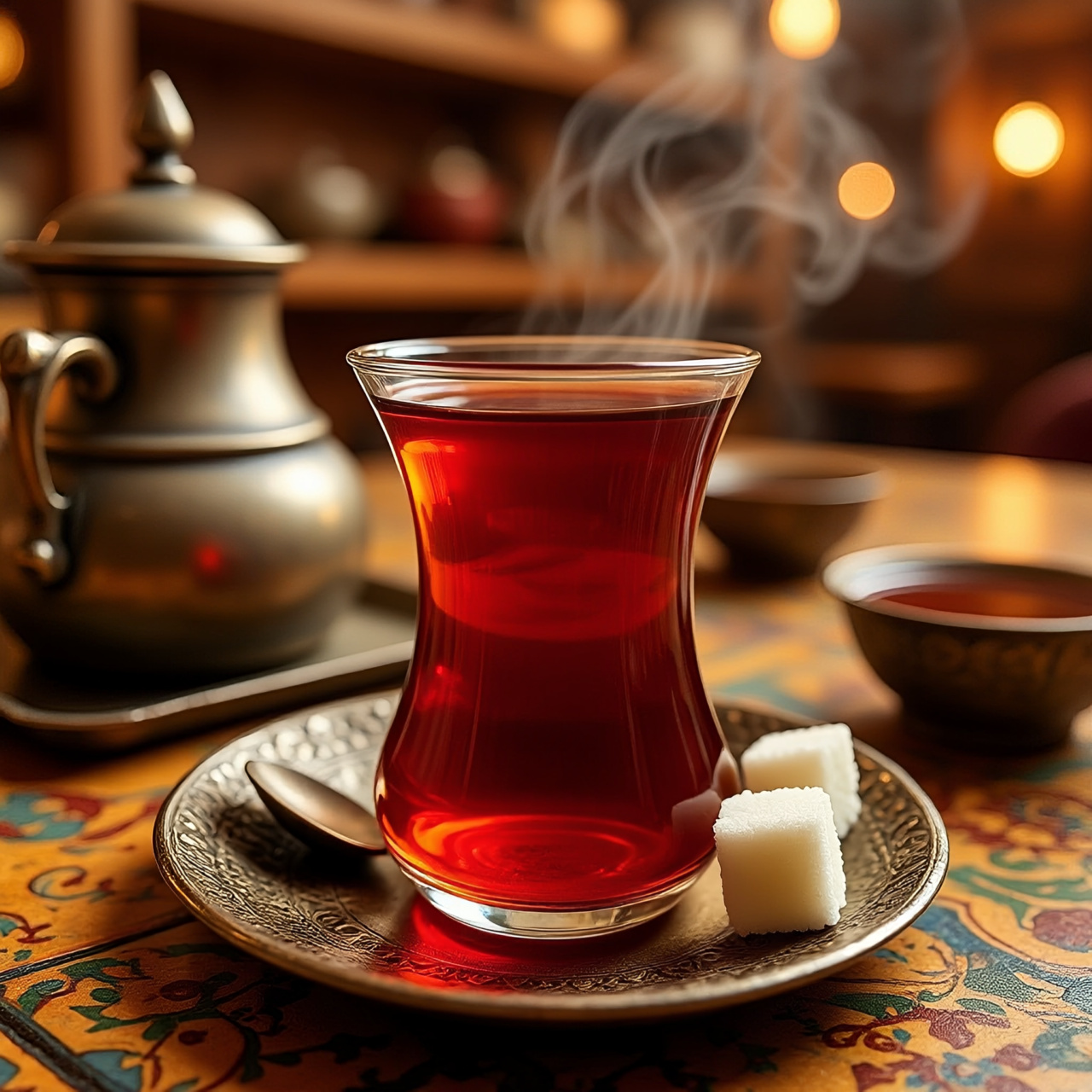
If you’ve been to Turkey, you’ve seen it everywhere: small tulip-shaped glasses filled with deep red tea, served non-stop in offices, shops, on ferries, and at street corners. Çay isn’t just a drink there. It’s the default pause button in the day.
What Makes Turkish Tea Different
Turkish tea comes from the Rize region on the Black Sea coast. It’s black tea, but the way it’s brewed and served is unique.
The tool is a çaydanlık – two stacked teapots. The bottom one boils water. The top one holds a strong concentrate of loose tea leaves. When someone wants tea, you pour some concentrate from the top pot, then top it up with hot water from the bottom.
This gives you control.
- Açık: light, more water
- Demli: strong, more concentrate
- Tavşan kanı: “rabbit blood” – the ideal deep red color, strong but not bitter
The result is tea that’s hot, strong, and served in small amounts so it stays hot while you drink it.
Why the Small Tulip Glass?
The glass is called ince belli, meaning “slim-waisted.” The shape does two things:
- The narrow middle holds heat, keeping the tea hot longer.
- The wide top lets you see the color and smell the aroma.
You never add milk. Turkish tea is drunk plain, often with 1-2 sugar cubes stirred in. The bitterness of the tea balances the sweetness.
It’s About Pace, Not Caffeine
A single glass is 80-100ml – small on purpose. The point isn’t to chug it and move on. It’s to sip slowly while talking. Refills come automatically. In Turkey, refusing a second glass is the polite way of saying “I need to leave.”
Because it’s served constantly, Turks drink an average of 3-5kg of tea per person per year, one of the highest rates in the world. But it’s spread across the day in small doses.
What It Goes With
Turkish tea isn’t paired with meals like in some cultures. It’s a between-meal drink, served with:
- Simit: sesame-crusted bread rings
- Börek: flaky pastry with cheese or meat
- Olives and cheese at breakfast
- Nothing at all – often it’s just the tea and conversation
The rule is simple: if people are talking, tea is being poured.
How to Make It at Home
You don’t need a real çaydanlık. Use two small pots.
- Put 2-3 tbsp of Turkish or strong black tea leaves in the top pot. Add a little boiling water and let it steep for 2-3 min.
- Boil water in the bottom pot.
- Pour 1/3 to 1/2 of the concentrate into a glass, then top with hot water to your taste.
- Serve with sugar cubes. Don’t stir too much – let the sugar sit at the bottom.
Use a black tea like Rize, Ceylon, or Assam. Avoid bagged tea if you can – the loose leaves give a cleaner, less bitter brew.
The Bottom Line
Turkish tea works because it’s built for social life. Small glasses keep it hot. Strong concentrate lets you adjust strength. Constant refills keep the conversation going. It’s low effort, low cost, and it forces you to slow down for 5 minutes.
If you want the real experience, drink it from a tulip glass, outside, with someone talking. The tea tastes better that way.
Want me to give you a comparison between Turkish tea, Moroccan mint tea, and British tea so you see how each culture uses tea differently?