Butter Chicken – India’s Dish That Conquered the World Without Losing Its Soul
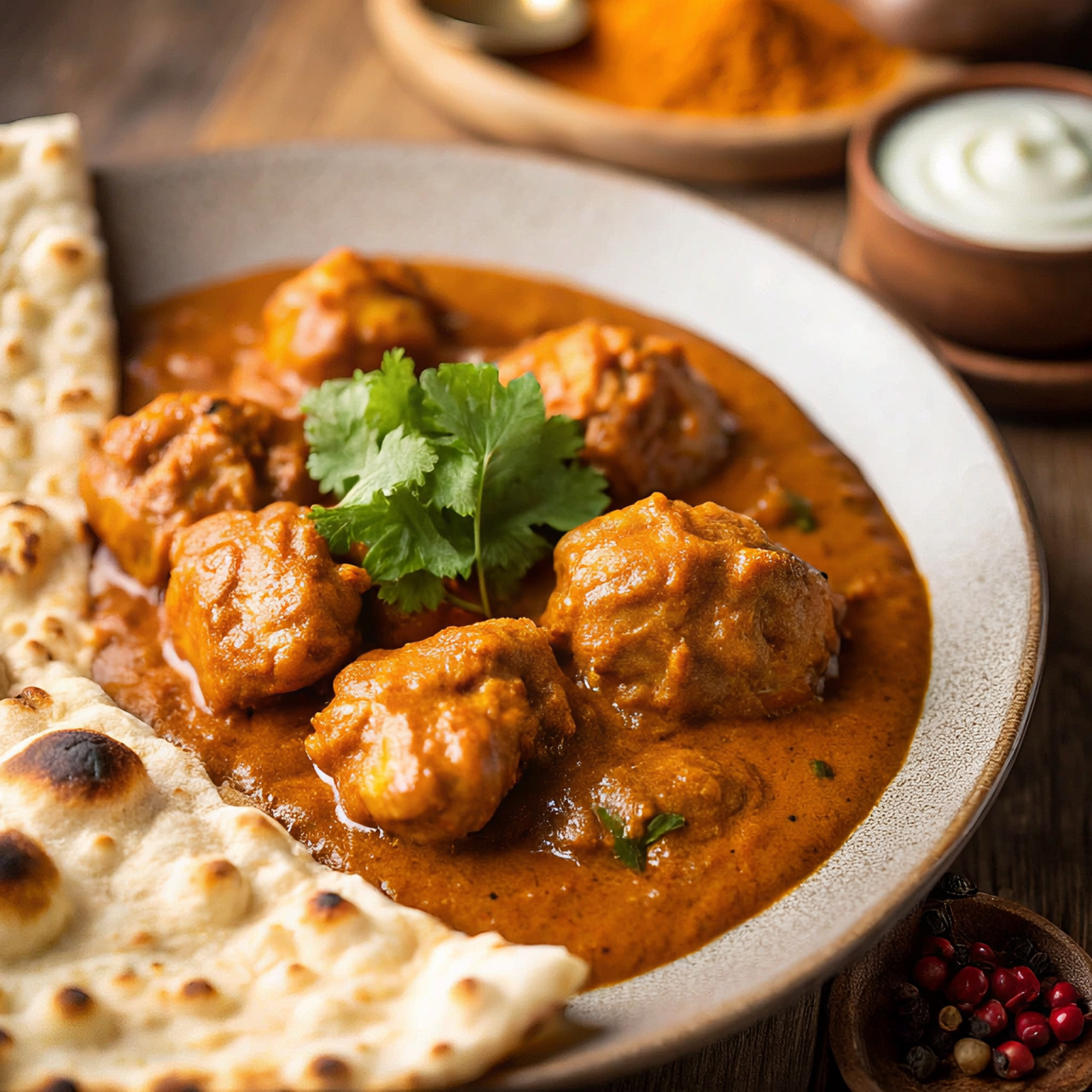
If you’ve ever been to an Indian restaurant outside India, odds are butter chicken was on the menu. It’s creamy, slightly sweet, mildly spiced, and loaded with tender chicken in a tomato-based sauce. In India it’s called Murgh Makhani, and it started in Delhi in the 1950s almost by accident.
How It Started
The story goes back to Moti Mahal restaurant in Delhi. Chefs Kundan Lal Gujral, Kundan Lal Jaggi, and Thakur Das had leftover tandoori chicken drying out. They didn’t want to waste it, so they simmered the pieces in a sauce made from tomatoes, butter, cream, and spices.
What came out was rich, velvety, and milder than most North Indian curries. It caught on fast. Tourists loved it because it wasn’t overwhelmingly spicy, and locals liked it because the flavor was deep but balanced.
What’s Actually in It
1. The chicken: Marinated in yogurt, lemon, ginger, garlic, garam masala, and chili. Traditionally cooked in a tandoor for that smoky char, but grilled or pan-seared works at home.
2. The sauce: The base is tomatoes cooked down with butter, cream, cashew paste, and a blend of spices – garam masala, fenugreek leaves called kasuri methi, cumin, coriander, and a touch of sugar.
3. The finish: More butter and cream at the end. That’s where the name comes from. The sauce should be smooth, orange-red, and cling to the chicken without being greasy.
Why It Works
Butter chicken hits 3 things at once:
- Richness: Butter and cream give it body and a silky mouthfeel.
- Acidity: Tomatoes cut through the fat so it doesn’t feel heavy.
- Warmth, not heat: Spices are there for aroma and depth, not to burn your mouth. That’s why it’s popular with people who don’t eat spicy food.
It’s comfort food, but still feels special. You don’t eat it every day in India – it’s a restaurant or weekend dish because of the butter and cream.
How It’s Eaten
Never alone. It’s served with naan to scoop the sauce, or with basmati rice to soak it up. A squeeze of lemon and a sprinkle of cilantro on top brightens it up. In North India, you’ll often see it paired with garlic naan or roti.
The Home Version vs Restaurant Version
At home, you can get 90% there without a tandoor:
- Marinate chicken 2-4 hours.
- Sear it hard in a pan to get color.
- Blend tomatoes, cashews, ginger, garlic, and spices into a smooth sauce.
- Simmer the sauce, add chicken, finish with butter and cream.
- Crush a bit of kasuri methi between your fingers and sprinkle it in at the end. That’s the signature aroma.
The difference at restaurants is the tandoor smoke and the amount of butter they’re not shy about using.
Bottom Line
Butter chicken became global because it’s approachable. It gives you the flavor and richness of Indian cooking without the heat that scares people off. But it’s not “dumbed down” – the balance of tomato, spice, butter, and cream is deliberate. It’s proof that Indian food isn’t just about spice level; it’s about layering flavor.
Want me to give you a version that’s dairy-free but still creamy?