Paella – Spain’s Saffron Rice Tradition
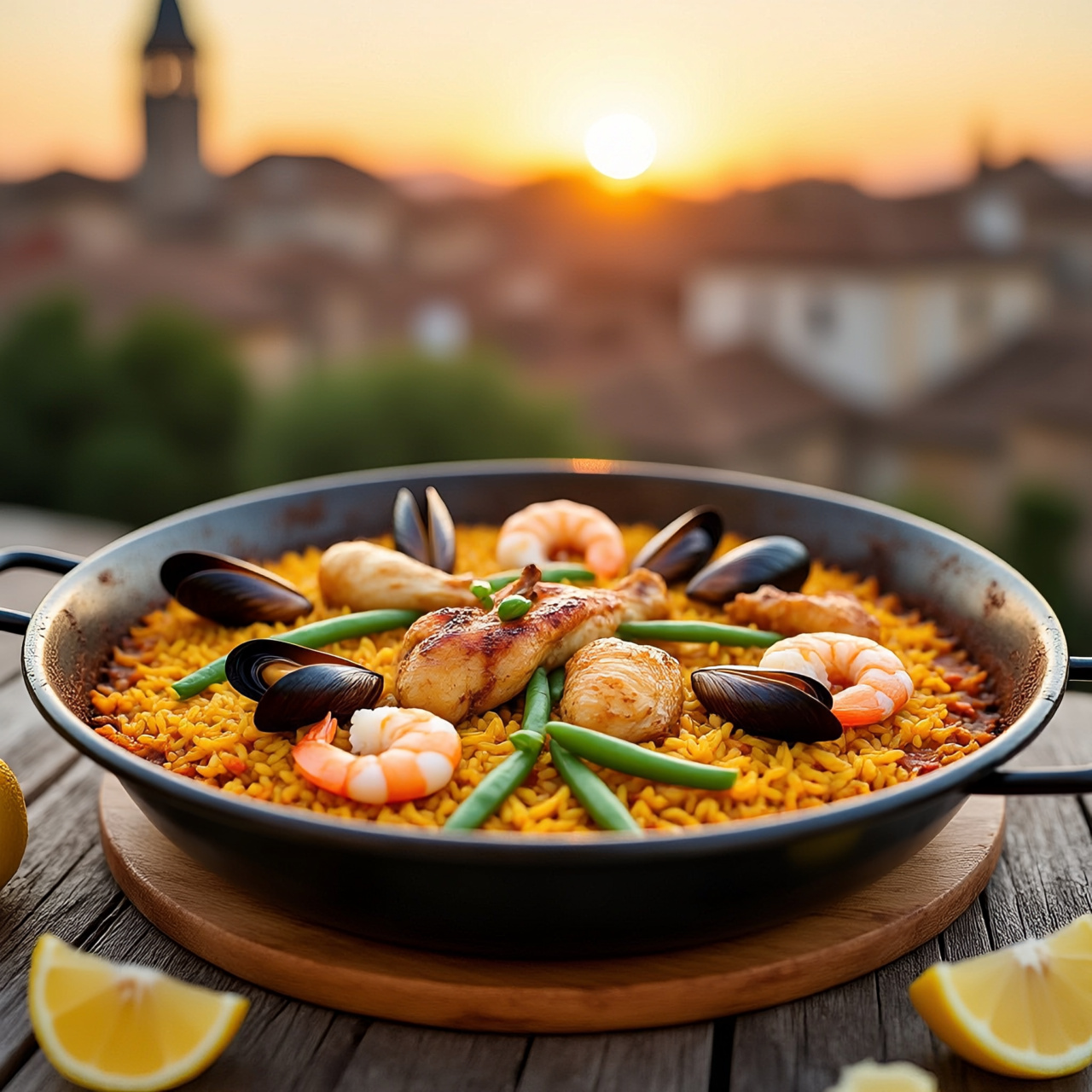
Paella is Spain’s most iconic rice dish, originating in Valencia on the eastern coast. It’s a one-pan meal cooked over an open flame, known for its golden color, smoky flavor, and the prized crispy bottom layer called socarrat.
1. Where It Started
Paella began in the 15th–16th centuries with farmers and laborers around Valencia’s Albufera lagoon. They cooked rice with whatever was available: rabbit, chicken, snails, beans, and saffron from nearby fields. The name comes from the wide, shallow pan it’s cooked in, paellera.
2. The Classic Versions
There are 3 traditional types:
- Paella Valenciana: The original. Chicken, rabbit, green beans, lima beans, and saffron. No seafood.
- Seafood Paella: Made with shrimp, squid, mussels, and clams. Popular on the coast.
- Mixed Paella: Combines meat and seafood. This is the version most people outside Spain know.
3. What Makes It Distinct
Four things define a good paella:
- Rice: Short-grain varieties like Bomba or Calasparra absorb liquid without breaking apart.
- Saffron: Gives the rice its golden color and subtle earthy flavor.
- Sofrito: A base of tomatoes, garlic, and paprika cooked down before adding rice.
- Socarrat: The lightly caramelized, crispy rice layer at the bottom of the pan. It’s considered the best part.
4. How It’s Eaten
Paella is a social dish. It’s cooked in one large pan and served directly at the table. Everyone eats from the same pan with a spoon. In Valencia, it’s traditionally a Sunday lunch eaten outdoors.
5. Common Mistakes
- Stirring the rice after adding it – this releases starch and makes it sticky.
- Using the wrong rice – long-grain rice doesn’t work.
- Skipping the rest time. After cooking, paella should rest 5 minutes off heat so the rice finishes absorbing the broth.
Want the next article on Ramen, Croissant, or Butter Chicken?