Ma fille a disparu alors que notre famille vivait en Égypte. Vingt ans plus tard, j’ai reçu une carte postale de là-bas, et les mots au dos m’ont brisé le cœur.
Partie 1
Pendant vingt ans, j’ai cru que ma fille avait disparu d’un jardin du Caire. Puis un jour, une carte postale d’Égypte est arrivée, avec une adresse à seulement cinq kilomètres de chez moi, dans l’Ohio. Je pensais que ce serait un nouveau rappel cruel du passé, mais ce que j’y ai trouvé m’a révélé que quelqu’un en qui j’avais eu confiance m’avait caché la vérité depuis le début.
La carte postale portait un timbre du Caire, mais l’adresse au verso était tout près. Il n’y avait ni message, ni signature, seulement une phrase écrite en petites lettres capitales : « Viens seul si tu veux encore connaître la vérité sur Tara. »
Ma fille avait disparu au Caire à l’âge de huit ans. Vingt ans plus tard, je roulais vers une rangée de garages de location, cette carte postale sur le siège passager, le cœur battant la chamade. J’ai trouvé le numéro quarante-deux, soulevé la porte métallique froide et me suis préparée au pire. Au lieu de cela, je me suis effondrée à genoux.
Une femme était assise sur une chaise pliante à côté de trois cartons. Elle me fixait du regard. Elle me regardait comme si elle avait passé sa vie à se demander si elle devait me haïr.
« Tu es arrivée rapidement, Cassidy », dit-elle.
J’avais du mal à respirer. « Tara ? »
Her lips trembled, but she did not move. “I needed to know if you would come.”
Part 2
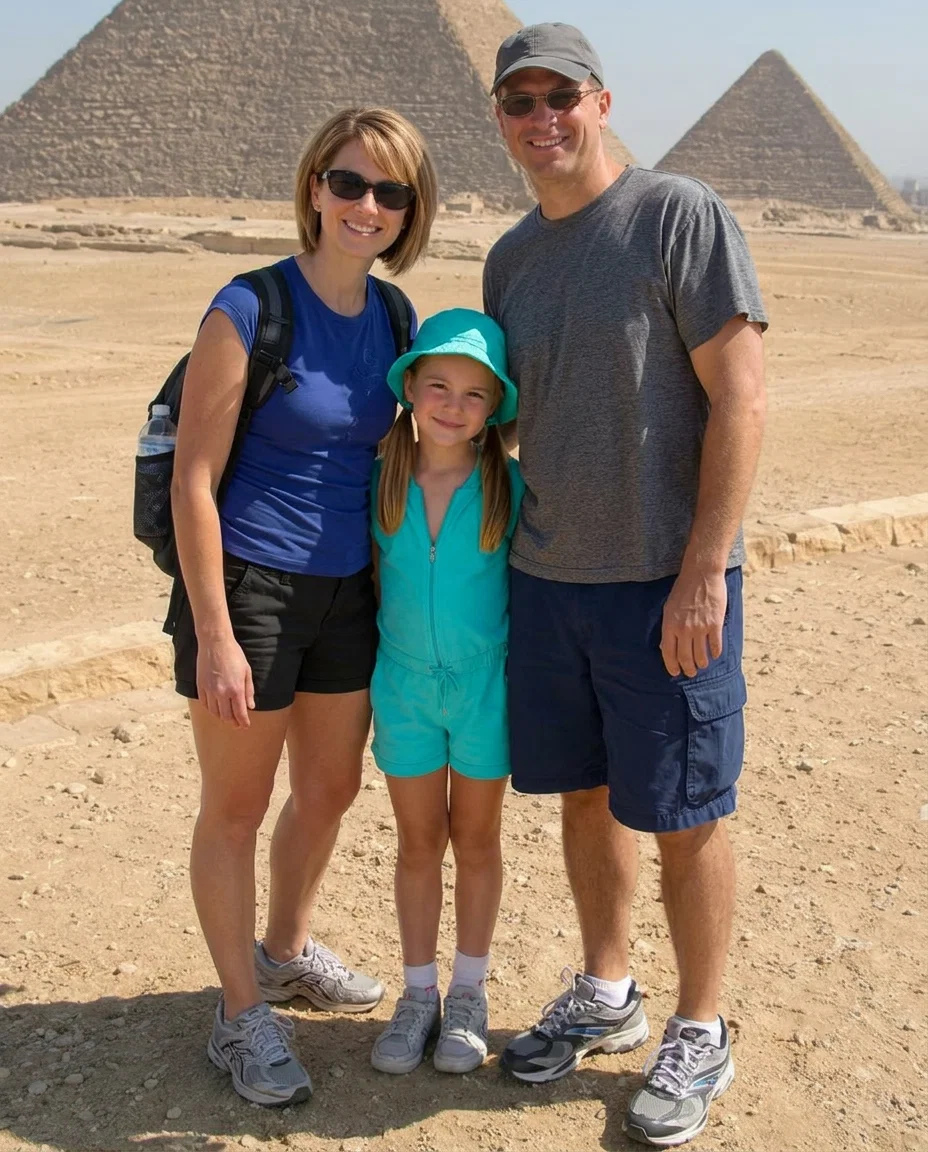
Twenty years earlier, my husband, Grant, moved our family to Cairo after receiving an overseas job offer as a reporter. We rented a small second-floor apartment with a garden below, and Tara loved playing there every afternoon. For a while, I believed we were happy.
Then came that Tuesday. I kissed Tara before leaving for work while Grant stayed home to write. “I’ll watch her,” he said. But when I returned that evening, police cars were outside our building. Grant told me Tara had gone downstairs to play, then disappeared when he looked away for a few minutes.
For weeks, everyone searched. Police, neighbors, and strangers called her name through the streets, but nothing came back. No witness. No clue. No Tara. Grant cried in public and blamed himself, but at night he became strangely quiet. After a year, we returned to Ohio without our daughter, and our marriage did not survive.
Twenty years later, Grant had built a career from our tragedy. He wrote books and speeches about loss while I built my life around waiting. Then the postcard arrived, and everything changed.
Inside that garage, Tara told me she had grown up believing I had abandoned her. She showed me letters she had written every birthday from age nine to eighteen—letters I had never received. Then she told me the truth. Claire, Grant’s trusted friend, had taken her from the garden. Grant had come to Claire’s apartment that same night, but instead of bringing Tara home, he told her I was gone.
Claire had raised Tara under another name. Before Claire died, she confessed everything in a letter: Grant had wanted out of our marriage, wanted Claire, and wanted Tara too—but he did not want to look like the man who abandoned his wife and child overseas.
“He chose himself,” Tara said.
And with those three words, my whole past finally made sense.
Part 3
That night, Grant had a public event for his new book, *The Daughter I Lost in Cairo*. Tara showed me the poster on her phone, her voice cold.
“He made money from missing me.”
“No,” I said. “He made money from hiding you.”
Before the event, we went to Grant’s house. When he opened the door and saw Tara, all the color drained from his face.
“Tara,” he whispered.
“You remember my name,” she said. “That’s more than I expected.”
Grant tried to explain, but I stopped him. “You are done deciding what we get to hear.”
At the book event, Grant stood before a packed room, reading about the pain of losing a child. Then Tara stepped into the aisle.
“Was that before or after you left me at Claire’s apartment?” she asked.
The room went silent. Tara placed Claire’s confession, her birthday letters, and Grant’s notes on the table.
“My name is Tara,” she said. “I’m the daughter he claims he lost in Cairo. He didn’t lose me. He hid me.”
A reporter asked if Grant denied it. He looked around helplessly and said he had only been trying to protect everyone.
I stood beside Tara. “You protected your reputation,” I said. “You destroyed our lives.”
Later, Tara came home with me. I opened the cedar box I had kept for twenty years. Inside were her ribbons, her little red shoes, a pancake recipe card, and old missing posters softened at the edges.
“I kept what I could,” I told her. “Proof that you were loved.”
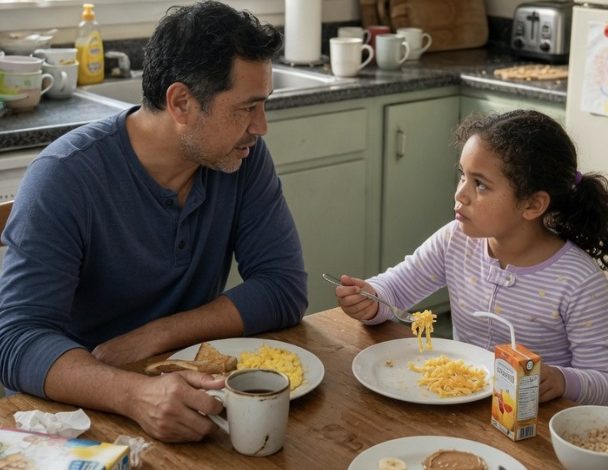
The next morning, I made pancakes. The first one burned, the second one tore, but by the third, Tara walked into the kitchen wearing my old sweater.
“I’m not ready to call you Mom,” she said quietly.
The words hurt, but they were honest.
“Then call me Cassidy,” I said. “That’s enough for me.”
For twenty years, I believed Egypt had taken my daughter. But it was a lie that stole her. And finally, truth had brought Tara back to my table.