Here’s an article in English about Halloumi – Cyprus’s most iconic food 🇨🇾
Halloumi: The Grilling Cheese of Cyprus
When you think of Cypriot cuisine, one ingredient comes to mind almost instantly: halloumi. This unique cheese is so central to Cypriot culture that the EU granted it Protected Designation of Origin status in 2021. It’s salty, squeaky, and the only cheese that can be grilled or fried without melting — making it a favorite for vegetarians and meat-lovers alike.
What Makes Halloumi Special?
Halloumi is traditionally made from a blend of goat’s and sheep’s milk, though some modern versions use cow’s milk. What sets it apart is the way it’s prepared. After curdling, the cheese is heated in its own whey and folded, which gives it that characteristic layered texture and high melting point.
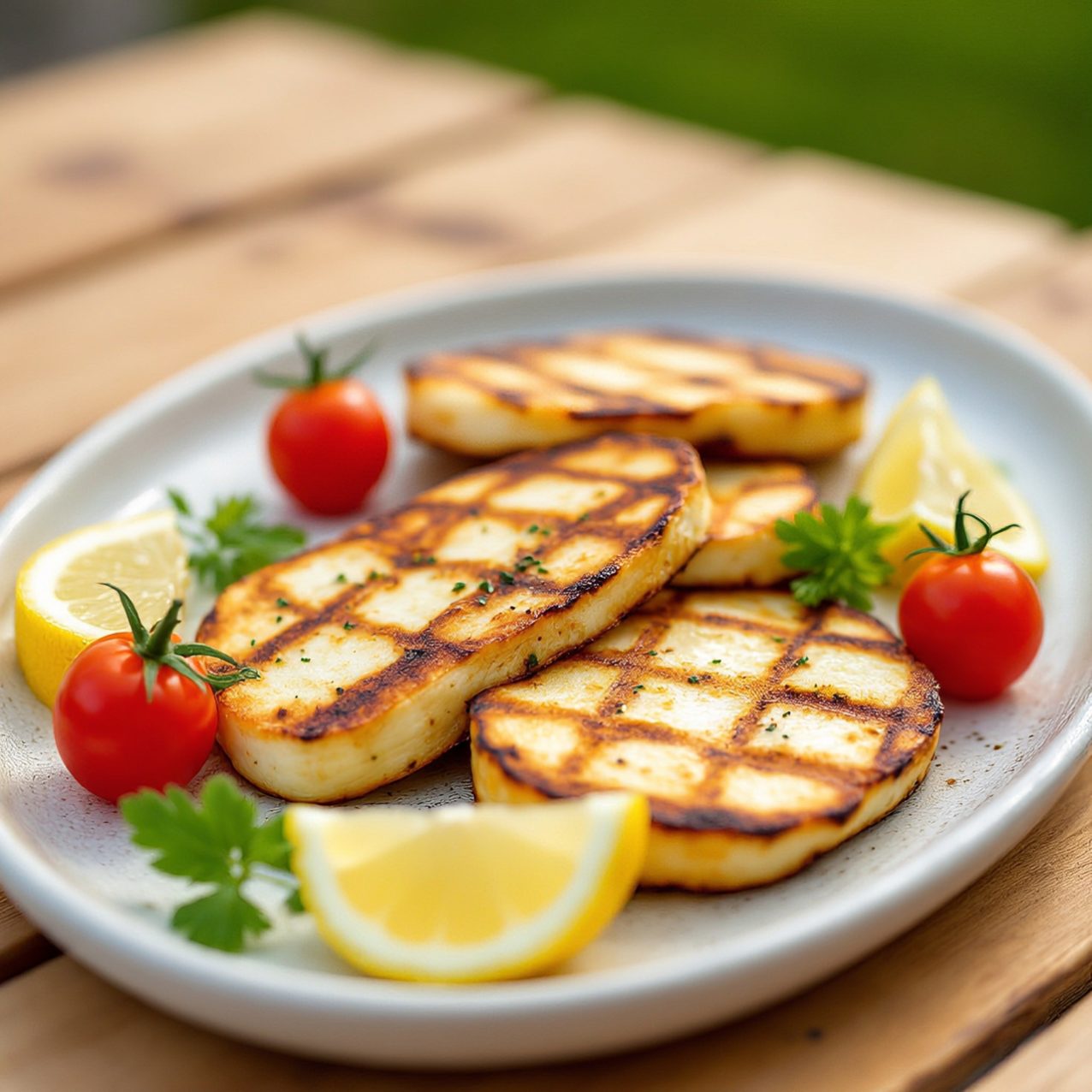
The result is a cheese that holds its shape under heat. When grilled or pan-fried, the outside turns golden and crispy while the inside stays soft and slightly chewy.
How It’s Eaten in Cyprus
In Cyprus, halloumi isn’t just a side dish — it’s a meal on its own. You’ll find it:
- Grilled and served with lemon and fresh bread for breakfast
- Fried and paired with watermelon in the summer — a classic Cypriot combo
- In salads, wraps, and mezze platters alongside olives, tomatoes, and tzatziki
- With souvlaki or grilled meats at family gatherings
The salty flavor pairs perfectly with the fresh, bright ingredients of Mediterranean cooking.
Cultural Significance
Halloumi has been made in Cyprus for centuries, with recipes passed down through generations. It’s often made at home in villages, especially during spring when sheep and goat milk is most abundant. Making halloumi is still a social event in many Cypriot communities.
For Cypriots, it’s more than cheese. It’s a symbol of the island’s agricultural heritage and a point of national pride.
Try It Yourself
If you’ve never cooked halloumi, it’s simple: slice it 1cm thick, pat it dry, and grill or fry it for 2-3 minutes per side until golden. No oil needed — it’s already high in fat. Serve it hot with a squeeze of lemon to balance the saltiness.
Want me to do the same for Kleftiko — the slow-roasted lamb dish — or Souvlaki next?