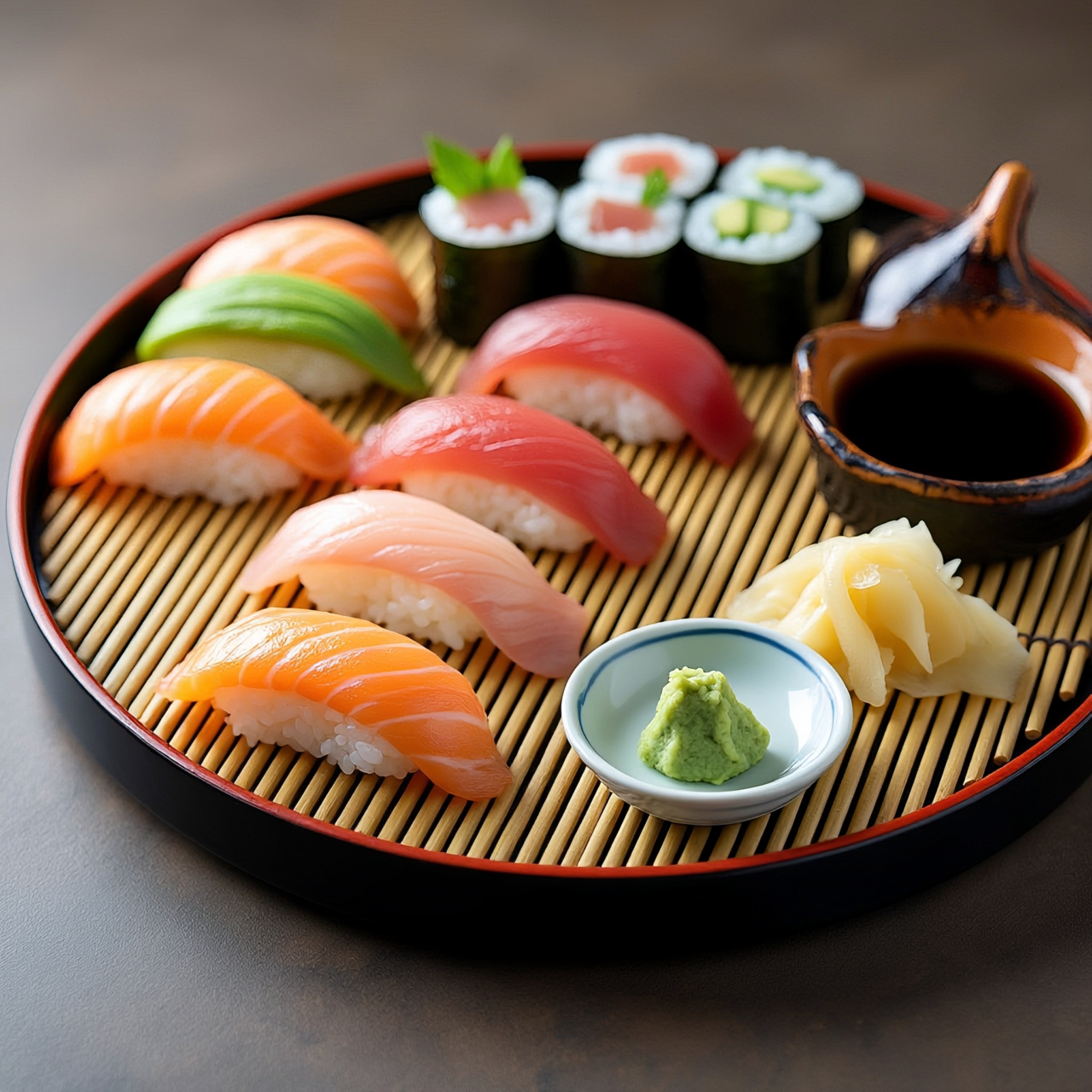
Sushi – Japan’s Art of Rice and Fish
Sushi is one of Japan’s most famous dishes, known worldwide for its balance of simplicity, freshness, and precision. Despite what many think, “sushi” doesn’t mean raw fish – it refers to vinegared rice paired with seafood, vegetables, or egg.
1. The Origins
Sushi started in Southeast Asia over 1,000 years ago as a way to preserve fish in fermented rice. The modern version, nigiri sushi, was developed in Tokyo in the early 1800s by Hanaya Yohei. He pressed small mounds of vinegared rice by hand and topped them with fresh fish, creating fast food for busy Edo residents.
2. Key Types
- Nigiri: A slice of fish or seafood on top of a small oblong of rice, often with a dab of wasabi.
- Maki: Rice and fillings rolled in seaweed and sliced into rounds. Includes hosomaki, futomaki, and uramaki.
- Sashimi: Thinly sliced raw fish served without rice. Technically not sushi, but often served alongside it.
- Chirashi: A bowl of sushi rice topped with scattered pieces of fish and vegetables.
3. What Makes It Work
Three things define good sushi:
- Shari: The rice must be short-grain, seasoned with rice vinegar, sugar, and salt, and served at body temperature.
- Netta: The topping, usually fish, must be extremely fresh.
- Technique: The rice is shaped by hand with just enough pressure to hold together without being dense.
Wasabi, soy sauce, and pickled ginger are served on the side to cleanse the palate and add contrast.
4. Why It’s Popular Globally
Sushi feels light but filling, healthy, and customizable. It works for people who want raw fish, and for those who prefer cooked shrimp, avocado, or tempura rolls. The presentation is also part of the appeal – clean lines, color contrast, and minimal garnish.
5. Common Misconception
Raw fish isn’t required. Many rolls use cooked shrimp, crab, eel, or vegetables. California rolls, for example, were created in the U.S. for people who didn’t want raw fish, using avocado, cucumber, and imitation crab.
Want me to do the next one on Paella, Ramen, or Croissant?